Intergenerational conversations on Promoting Transformative Masculinities and Femininities in Africa
- 52 views
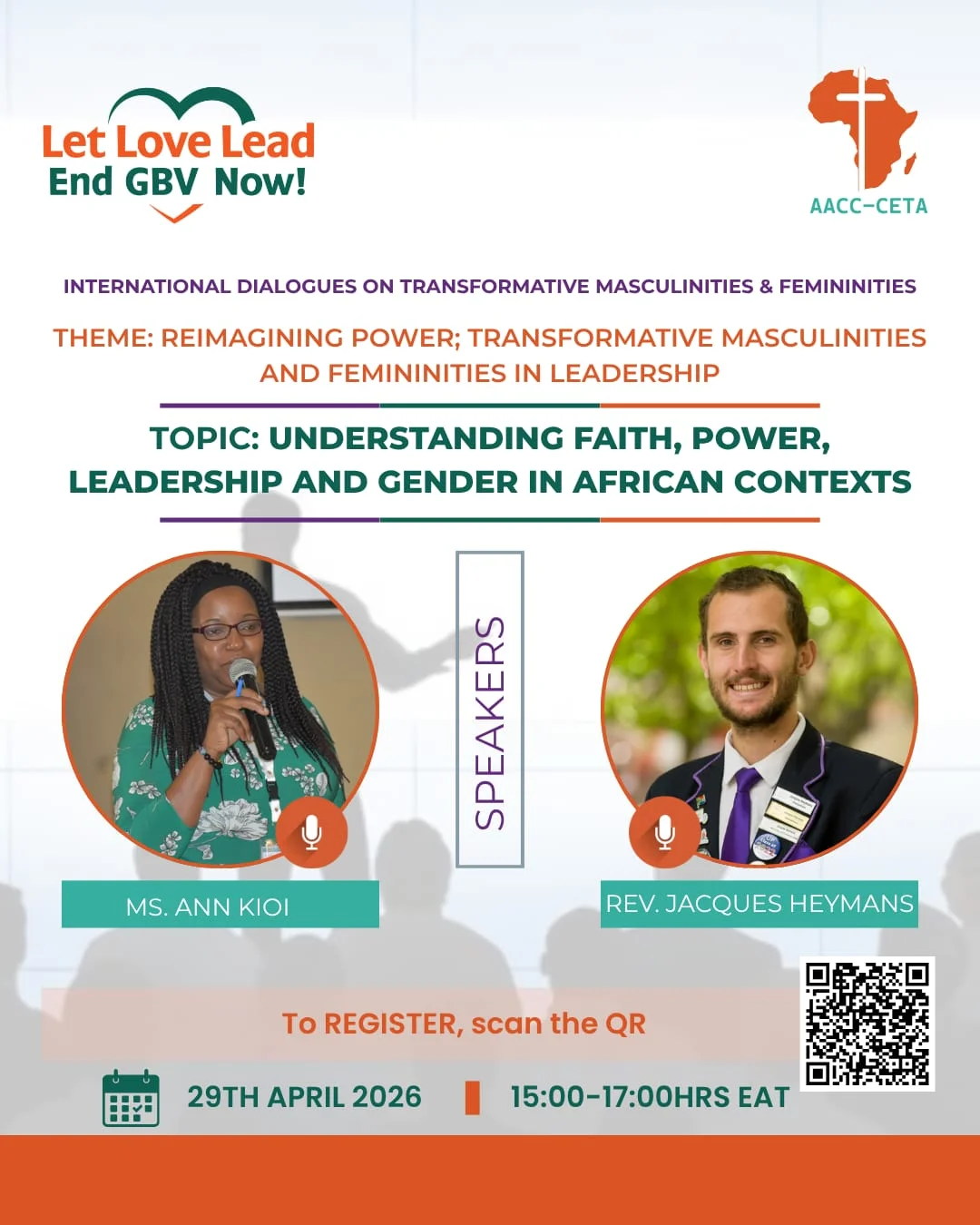
The Agenda 2063; The Africa we want; envisages a non-sexist Africa, where girls and boys can reach their full potential, and where men and women contribute equally to the development of their societies. To achieve this, all forms of SGBV must have been eliminated by 2063, and this means putting an end to all harmful social practices. This indeed is possible given that the majority of Africa’s Population are young people capable of unlearning the social, cultural, and religious values, norms, and practices that propagate SGBV, and learn new ways of living built on the core of Christ’s love that compels us to see ourselves in each other. With the slogan, ‘Let Love Lead: End GBV Now!, the AACC, through the Churches Campaign against SGBV in Africa has organized a series of regional intergenerational conversations on transformative masculinities and femininities for its member churches across the continent. The conversations will provide and promote safe spaces for the young people to unpack their cultural and religious gender norms, identify toxic gender and life-threatening gender stereotypes and be empowered to embrace and promote transformative and life affirming masculinities and femininities to end SGBV. This years webinars will run with the theme, Reimagining Power: Transformative Masculinities and Femininities in Leadership and Decision-Making Spaces.
Rationale
From the moment children are born, society teaches them the gender norms, roles, behaviors and attributes which are considered acceptable according to their community. Those associated with the male gender are termed as masculinities and those associated with the female gender are termed as femininities. The social construction of masculinities and femininities shapes the relations between men and women. Toxic masculinities and femininities widen gender disparities which are usually magnified during moments of crisis and worsen during pandemics. Research has proven that the burden of pandemic like SGBV, HIV and COVID 19 is more felt by women than the men. On one hand, the toxic femininities strip off the women the power to make decisions even on issues concerning their own health and safety, in addition to making them the main victims of human rights violations. On the other hand, the toxic masculinities lure men into making decisions that perpetuate sexual and Gender Based Violence and also increase the vulnerability of women, children and the men themselves to contracting and spreading the pandemics.
The church is called into mission to extend the abundant life that Christ offers to all God’s people and has a responsibility of ensuring their health and safety from all public health threats. This mission cannot be achieved unless the Church invests in the transformation of power relations between women and men, through promoting transformative masculinities and femininities, which are life affirming and free both women and men from the impact of toxic gender stereotypes. The regional intergenerational conversations on transformative masculinities and femininities are an opportunity for the church to empower the young people effect this much needed transformation.
Main Objective
To equip youth from AACC member churches to actively influence leadership and decision-making spaces by challenging toxic gender ideologies and promoting transformative masculinities and femininities that advance gender justice in Africa.
Objectives
1. To strengthen understanding of positive gender norms and equitable power dynamics in communities and leadership spaces.
2. To equip participants with life-giving theologies, knowledge, and skills to promote transformative masculinities and femininities in leadership.
Zoom link
Register in advance for this meeting:
https://us06web.zoom.us/meeting/register/oI7jy6ntQZaRI0LklbmDdQ
After registering, you will receive a confirmation email containing information about joining the meeting.